
Dubai has run through an unusually strong cycle, driven by population growth, residency reform and international capital inflows. Launch volumes responded, as they always do, and a large share of what was sold between 2022 and 2025 completes between now and 2028. Understanding where that supply lands is more useful than any citywide price forecast.
Supply is not evenly distributed
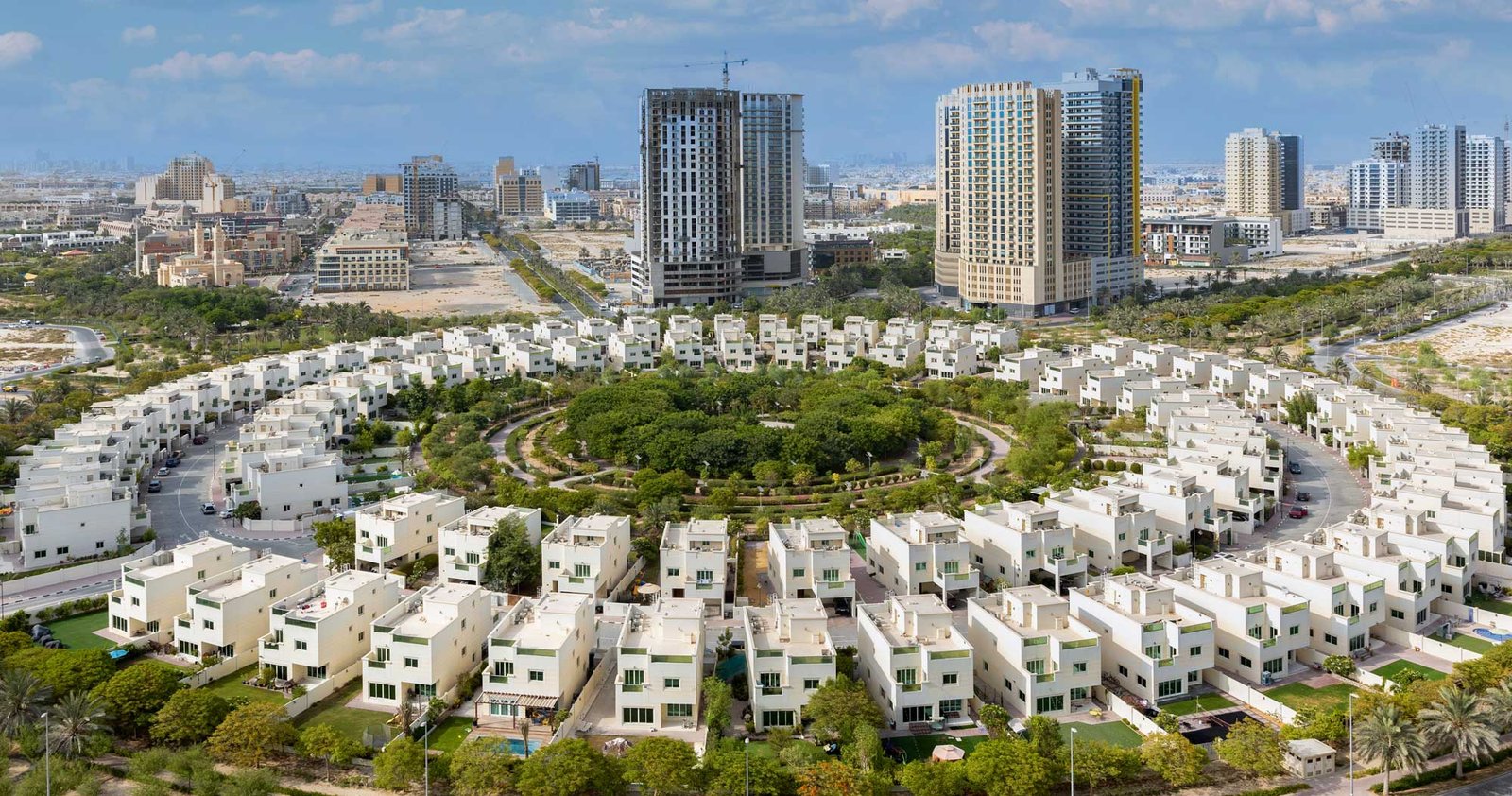
This is the single most important point, and it is the one headline commentary tends to flatten. A citywide average tells you very little when completions are concentrated in a handful of districts. From our own inventory, a small number of communities account for a disproportionate share of live availability: Jumeirah Village Circle, Dubai Islands, the Dubailand and Wadi Al Safa belt, Jabal Ali First and the Jumeirah Village Triangle corridor. Each of these is absorbing large volumes of broadly similar apartment product.
By contrast, established low-density communities and the prime coastal districts are adding comparatively little. Palm Jumeirah is effectively built out. Dubai Hills Estate is largely delivered. Those markets face a different problem, which is price, not oversupply.
What concentrated supply does to returns
Where many similar units complete at once, three things tend to follow. Rental growth stalls first, because tenants gain choice and landlords compete at renewal. Resale becomes harder next, since your unit is one of many near-identical listings. And service-charge-sensitive buildings separate from well-run ones, because when everything else is comparable, buyers and tenants start discriminating on running costs and management quality.
None of this implies a crash. It implies dispersion. The gap between the best and worst assets in the same district widens considerably during an absorption phase.
What supports the demand side
The demand story remains genuinely strong. Dubai's population continues to grow, the Golden Visa and remote-work residency routes have deepened the pool of long-stay residents, and the city has established itself as a base for relocating wealth rather than only a holiday market. Tourism and the hospitality pipeline support the short-let segment. Mortgage availability has broadened. These are structural, not cyclical, and they are why we would not read a heavy pipeline as a reason to stay out of the market.
How we would position
- Favour communities where supply is finite or where amenities and schooling are already delivered, since those cannot be replicated quickly.
- Interrogate the immediate surroundings of any off-plan purchase. Count what is under construction within a kilometre and due to complete in the same window as your unit.
- Prioritise the differentiators that survive an absorption phase: genuine frontage on water, park or golf, sensible service charges, a credible developer and efficient layouts.
- Be sceptical of yield projections built on today's rents in districts about to absorb thousands of competing units.
The practical takeaway
Dubai in 2026 is not one market and cannot be traded as one. The districts absorbing the heaviest supply will produce the widest range of outcomes, which means selection matters more now than at any point in the last three years. Buying well in a busy community can still work. Buying carelessly in one will not.